



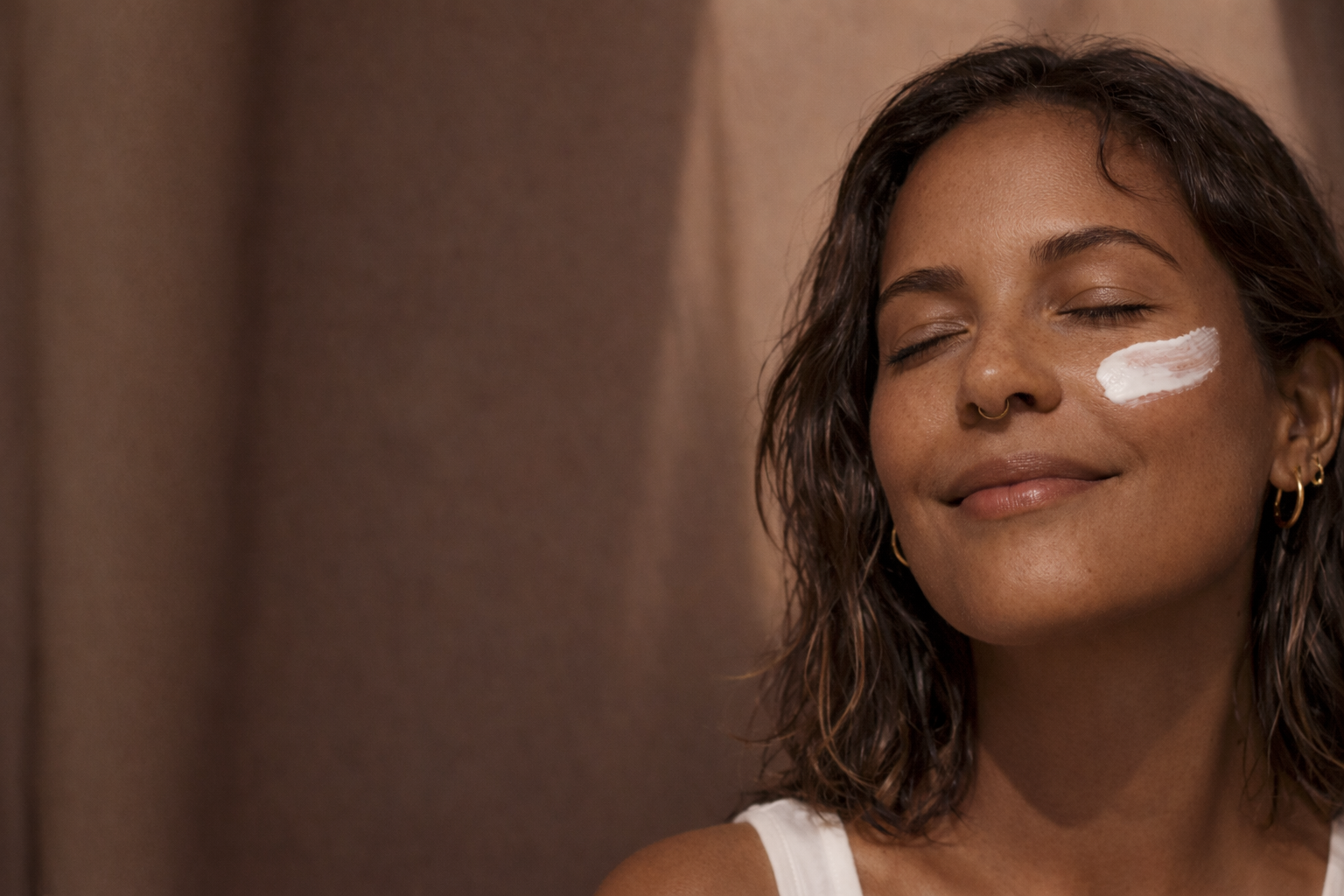
Expect More From Your Skincare

Simplified Skincare Solutions for the Real Bodybuilders
'Clean' isn't enough, so we set out to create something new, pregnancy friendly skincare built on safe, proven formulas that support you while you're living your life, and creating it.


Maternal Skincare vs. Clean Beauty: What’s the Difference?
Once I got pregnant, I realized there were certain skincare ingredients I could no longer use. I figured the easiest solution would be to head to Sephora and swap out my skincare routine for products that were safe for pregnancy. Instead, I was directed to the "clean beauty" section. The salesperson explained that these brands were "clean," so they would be a great option. At the time, I felt relieved. I assumed that "clean" meant pregnancy-safe. But when I got home, I started reading ingredient lists and researching what was actually considered safe during pregnancy. The deeper I looked, the more surprised I became. I learned something that completely changed the way I thought about skincare: Clean doesn't mean pregnancy-friendly. In fact, some products marketed as "clean" still contain ingredients that many healthcare providers recommend avoiding during pregnancy. Did you know retinol can be considered a clean beauty ingredient? Retinol is one of the most well-known skincare ingredients for improving wrinkles and acne, and many clean beauty brands include it in their formulations. Yet it's also one of the ingredients that pregnant women are commonly advised to avoid. That's when I realized the issue wasn't with clean beauty itself. The issue was that the word "clean" had become a shortcut, one that many of us naturally assume includes pregnancy safety. It doesn't. As I spoke with more moms, I realized I wasn't alone. So many of us were standing in store aisles, reading ingredient lists, and searching the internet trying to answer the same question: "Is this actually safe to use during pregnancy?" No one should have to become an ingredient expert just to buy a moisturizer. That experience is what led me to start Hizo. From day one, our mission wasn't simply to create another clean skincare brand. We set out to create skincare thoughtfully formulated with pregnancy in mind, prioritizing carefully selected ingredients without compromising on performance or luxury. At Hizo, every formula begins with one simple question: Would I feel confident recommending this to an expecting mother? Because mothers deserve more than marketing buzzwords. They deserve transparency, science backed formulations, and the confidence to care for their skin without second guessing every ingredient. Clean is a great place to start. But for us, it was never the finish line. Read How We Formulate for Pregnancy Safety. ~Crystal Osejo Founder
Learn more
Pregnancy Self-Care: 8 Ways to Support Your Body, Mind, and Skin
Pregnancy changes almost everything. Your body, your emotions, your routines, your priorities, and often, your relationship with yourself. In the middle of appointments, nursery planning, endless advice, and an ever growing to do list, self-care can quickly start to feel like another responsibility instead of a source of support. The good news? The most effective forms of pregnancy self care are often the simplest. We asked mothers in our community what genuinely helped them feel better during pregnancy. Their answers weren't expensive or complicated. They were small habits that helped them feel more rested, more supported, and more connected to themselves during a transformative season of life. Whether you're navigating first-trimester exhaustion, preparing for postpartum, or simply trying to feel more like yourself, these pregnancy self care tips can help. Pregnancy Self-Care at a Glance The most effective pregnancy self-care practices: Rest Hydrate Nourish your body Care for your skin Get out and get moving Protect your mental health Create supportive routines Ask for help Build community Set boundaries Make time for yourself 1. Respond to Fatigue Fatigue is one of the most common pregnancy symptoms, affecting 94% of women at some point, particularly during the first and third trimesters.During pregnancy, your body is: Building an entirely new organ (the placenta) Increasing blood volume by up to 50% Producing dramatically higher levels of hormones such as progesterone Supporting rapid fetal growth Increasing metabolic demands even at rest Yet many expecting moms continue to hold themselves to pre-pregnancy standards. Take the nap. Go to bed early. Cancel plans when your body needs recovery. Small investments to improve the quality of sleep can also make a meaningful difference: Pregnancy pillow Cooling sheets Blackout curtains Supportive mattress topper Prenatal massage from a qualified provider Rest is not a reward that must be earned. Growing a baby requires an extraordinary amount of energy, and recovery is part of the process. Perhaps the most important form of self-care is giving yourself permission to slow down without guilt. 2. Connect with Yourself One of the most unexpected challenges of pregnancy is how easy it can be to lose touch with parts of yourself that make up your identity. Make space for: Creative hobbies Friendships Learning Career ambitions Exercise (adaptive or new methods if needed) Personal goals The goal isn't to resist change. It's to remember that motherhood becomes part of who you are, not all of who you are. 3. Nourish Your Body Without Chasing Perfection Supporting your body isn't about perfection. It's about providing nourishment while extending yourself grace. Instead of focusing on "good" and "bad" foods, focus on consistency: Protein Hydration Fiber Fruits and vegetables Nutrient-dense meals 4. Stay Active Exercise during pregnancy doesn't need to be intense to be effective. Gentle movement can support: Mood Circulation Sleep quality Stress management Mobility Physical comfort Many moms find simple activities such as walking, prenatal yoga, stretching, and mobility work to be some of the most sustainable forms of exercise during pregnancy. 5. Develop a Pregnancy-Friendly Skincare Routine Pregnancy can bring unexpected changes to your skin. One week it may feel dry and sensitive, the next it may be oily, reactive, or prone to breakouts. While you can't control every change, having a simple skincare routine can create a small moment of consistency in a season that often feels anything but predictable. The best routine isn't necessarily the most complicated. Focus on a few products that support your skin's changing needs like: Gentle cleanser Hydrating moisturizer Targeted treatment for hormonal skin changes Retinol replacement Sunscreen For more guidance, explore our complete guide to pregnancy-safe skincare. Beyond the skin benefits, skincare can become a daily ritual of self-care—five quiet minutes in the morning or evening dedicated entirely to yourself. Sometimes feeling cared for starts with taking a moment to care for yourself. 6. Protect Your Mental Health Pregnancy advice is everywhere. Some of it is helpful. Some of it is overwhelming. You’re even getting some of it right now, but only you can decide what is right for you. Many women create boundaries around: Social media consumption Unsolicited advice Stressful conversations Comparison culture We always recommend consulting a professional source like your medical provider to help comb through the noise. 7. Build Community Pregnancy can feel surprisingly isolating, even when you're surrounded by people. Connecting with other mothers can help normalize: Anxiety Body changes Emotional ups and downs Postpartum experiences Questions you may not feel comfortable asking elsewhere Whether it's a friend, support group, prenatal class, or online community, connection often reminds us that we're not navigating this experience alone. 8. Ask for Help Early One of the hardest habits for many women to break is doing everything themselves. Pregnancy is an opportunity to practice receiving support. This might mean: Delegating responsibilities Accepting help from family and friends Planning support for postpartum Hiring support when possible Letting some tasks wait You do not have to prove how much you can carry. Final Thoughts The best pregnancy self-care practices aren't necessarily expensive, luxurious, or time-consuming. Often, they're surprisingly simple: More rest.More support.More boundaries.More nourishment.More grace. Pregnancy is one of life's biggest transitions. Caring for yourself through it isn't indulgent, it's essential.
Learn more
4 Ingredients to Avoid During Pregnancy (Doctor-Backed) & What Hizo Uses Instead
Pregnancy changes everything, including how you think about what goes on your skin. For me, it started with one ingredient: retinol. When I was pregnant with my daughter Zoa, my OB told me I couldn’t use it. That one moment led to a much bigger question: What else should I be avoiding? Turns out, kind of a lot. After endless deep dives into ingredient lists, conflicting information, and honestly, a lot of unnecessary stress, I wished all the information about pregnancy safe skincare ingredients was in one place. This is a clear, doctor-informed look at skincare ingredients to be mindful of during pregnancy and just as importantly, what Hizo uses instead to deliver real results without compromise. Hizo products coming soon. Sign up for updates. A Quick Note Before We Start Pregnancy-safe skincare isn’t about fear, it’s about being thoughtful. A pregnancy focused skincare routine isn't all-or-nothing. Some ingredients are big red flags, some are 'maybe' depending on the dose, and plenty of others are perfectly safe. The goal is clarity, not restriction. Ingredients Commonly Avoided During Pregnancy: 1. Retinoids (Vitamin A Derivatives) Includes: Retinol Retinal Retinyl esters Prescription retinoids These are widely recommended to be avoided during pregnancy due to their association with potential developmental risks. What We Use Instead At Hizo, we take a multi-path approach to anti-aging and skin renewal, without relying on vitamin A derivatives like retinol: Bakuchiol→ A plant-based retinol alternative that helps support smoother, firmer-looking skin Niacinamide → Helps improve the appearance of tone, fine lines, and overall skin clarity Low-dose Glycolic Acid → Supports gentle cell turnover and smoother texture Instead of one aggressive ingredient, we layer gentler, clinically supported actives to achieve visible results. 2. High-Strength Salicylic Acid Salicylic acid is one of the most commonly used ingredients for blemish-prone skin. While low concentrations in topical skincare are generally considered compatible with pregnancy by many dermatologists and OB-GYNs, higher concentrations (over 2%), particularly professional peels and intensive leave-on treatment, are widely considered best to avoid during pregnancy. Our Approach Rather than relying on high levels of a single exfoliating ingredient, we take a balanced approach. We use a low concentration of salicylic acid (0.5%) and pair it with other carefully selected ingredients to help support clearer-looking skin while respecting the skin barrier. 0.5% Salicylic Acid → Helps keep pores clear and gently exfoliates the skin's surface Azelaic Acid → Helps reduce the appearance of blemishes and supports a more even-looking complexion Gluconolactone (PHA) → A gentle exfoliant that smooths and brightens while helping maintain hydration Niacinamide + Zinc PCA → Help balance excess oil and minimize the appearance of pores By combining multiple complementary ingredients, we're able to deliver effective pore and blemish support without relying on aggressive concentrations that can increase irritation. The result is a thoughtful, pregnancy-conscious approach designed to keep skin looking clear, balanced, and healthy. 3. Hydroquinone Often used for dark spots and hyperpigmentation, this has a higher absorption rate compared to many topical ingredients, so it should be avoided during pregnancy. What We Use Instead Hyperpigmentation and melasma are some of the most common pregnancy skin concerns, so we took this seriously. Our approach combines multiple pigment-supporting ingredients: Azelaic Acid → Helps improve the appearance of uneven tone Niacinamide → Brightens and supports overall skin clarity THD Ascorbate (Vitamin C) → A stable, gentle form of vitamin C that enhances radiance Instead of one harsh brightening agent, we use a layered, synergistic approach for more balanced results. 4. Harsh or Overly Aggressive Actives Pregnancy can make skin more sensitive and reactive therefore overly strong treatments / AHAs such as lactic acid or glycolic acid at heavy concentrations (~10–20%) can disrupt the skin barrier and lead to irritation. Also, there are fragrances, preservatives, and non-actives that can range from irritating to risky during pregnancy. What We Use Instead We prioritize a barrier-first approach: Ceramide NP → Helps support and strengthen the skin barrier Niacinamide → Reinforces skin resilience while improving tone Gentle exfoliants (PHA + low-dose AHA) → Support renewal without compromising sensitivity Because healthy skin starts with a strong, balanced foundation. How We Formulate at Hizo Every Hizo formula is built with pregnancy in mind from day one, not adjusted after the fact. We carefully vet every ingredient. We formulate at intentional, effective levels. We work alongside dermatologists (many of whom are moms.) And we prioritize both safety and visible results. We don’t believe you should have to choose between the two. You don't have to overthink this. (That's our job.) If you’ve ever stood in front of your skincare products wondering “is this safe?”, you’re not alone. I created Hizo because I was in that exact position. More specifically I asked myself: What skincare ingredients should be avoided during pregnancy?Retinoids, hydroquinone, and high-strength salicylic acid (over 2%) are commonly avoided due to irritation and absorption concerns. Is it possible to treat melasma without hydroquinone?Yes. A combination of ingredients such as azelaic acid, niacinamide, and vitamin C can help improve the appearance of uneven pigmentation. What can I use instead of retinol during pregnancy?Formulations that include bakuchiol, niacinamide, and gentle exfoliating acids can support smoother, more refined-looking skin. Can I manage acne during pregnancy without harsh treatments?Yes. Balanced systems using azelaic acid, niacinamide, zinc PCA, and gentle exfoliants can help reduce the appearance of breakouts while supporting the skin barrier. How should I approach skincare during pregnancy?Focus on a simple, consistent routine built around gentle cleansing, targeted treatment, and barrier support. In a nutshell, we’ve done the research, worked with experts, and built these formulas so you don’t have to second guess every ingredient. So you can focus on yourself, your baby, and feeling good in your skin during this phase of life. We've got you, mama! ~Crystal Osejo(Founder) Hizo products coming soon. Sign up for updates.
Learn more
Pregnancy-Safe Skincare: What to Use, What to Avoid, and How to Build a Routine
Pregnancy brings a wave of changes, some expected, others less obvious. Most of us know to avoid alcohol and raw meats. But at that first doctor appointment, many women are surprised to learn that their skincare routine may need a second look. It isn’t always easy to figure out which products are safe and which should be avoided - which is why we created Hizo, so you don’t have to do all that research yourself. But many of your current skincare products may already be safe, so we created this guide to help cut through some of the confusion and help you can feel confident, safe, and stress-free about the products you’re using during this important time. And like all Hizo formulations, this post has been reviewed by Hizo’s medical advisory group – a board certified team of OG-BYNs and Dermatologists - so you can feel confident with the information provided. How Pregnancy Changes Skin Beyond ingredient safety, pregnancy often calls for updates to your skincare routine simply because your skin itself is changing. Here’s a quick look at some of the most common changes. Hormonal Shifts and Your Skin Pregnancy triggers powerful hormonal changes that affect the body from head to toe, and the skin is no exception. These shifts commonly lead to: Oil Production Changes – Rising estrogen and progesterone can stimulate sebaceous glands, often leading to increased oiliness and breakouts. For some women, however, the opposite occurs, and their skin becomes drier. Either way, the cleanser and moisturizer you loved may no longer suit your needs. Increased Blood Flow and Skin Sensitivity – Hormones boost circulation and make blood vessels more reactive. While this can create the well-known “pregnancy glow,” it can also bring heightened sensitivity, redness, or itching. During pregnancy you may want gentler products that avoid high acid concentrations or added fragrances. Skin Barrier Disruption – As hormones and stretching skin put stress on the outer layer, the barrier can weaken. This makes it harder to retain moisture, leaving skin prone to dryness, irritation, and even conditions like eczema. Pigmentation Changes – Higher estrogen and melanocyte-stimulating hormone levels can increase melanin production. The result can cause melasma – a common skin change where dark, patchy spots appear on the cheeks, forehead, or upper lip. Together, these changes explain why skincare needs often shift during pregnancy. But the good news is that many of the skin changes brought on by pregnancy are temporary. Shifts like acne flare-ups, melasma, or dryness often improve or even resolve once hormone levels settle after birth. While some concerns may take time to fade, most are part of the body’s natural adjustments and don’t last forever. Knowing this can make the day-to-day changes feel a little less stressful. It’s also worth remembering that pregnancy brings positive changes, too. Increased blood flow can give skin a healthy, radiant look—that’s the famous “pregnancy glow.” Many women also notice their hair growing thicker, shinier, and faster thanks to prolonged growth cycles, and their nails may feel stronger as well. These small perks are the body’s way of balancing the more frustrating shifts, and they serve as a reminder that your body is doing something incredible. Ingredients to Avoid Skincare Prescriptions The good news is that doctors will normally directly advise you on prescription skincare so you don’t need to do the research yourself, but here are the most common ingredients to avoid in prescription skincare. Oral and Topical Retinoids – These vitamin A–derived compounds are among the most important to avoid during pregnancy. The most common prescription is Accutane, but other brand name prescriptions include Retin-A, Renova, Atralin, Differin, Tazorac, Avage, Fabior, Claravis, Absorica, Amnesteem, Myorisan, and Zenatane. In addition to prescription, retinoids can also be found in over-the-counter products (more on that below). Oral Tetracycline Antibiotics – These include tetracycline, doxycycline, and minocycline. They’re sometimes prescribed for acne or certain skin infections, but they should be avoided during pregnancy. These drugs can affect a baby’s developing teeth and bones, sometimes leading to permanent discoloration or growth problems. Topical Steroids – Topical corticosteroids (such as clobetasol, fluocinonide, or betamethasone) can be prescribed for skin conditions like eczema or psoriasis. But in high-potency steroids used over large areas or for long periods, there has been links to low birth weight. Topical and Oral Dapsone – This acne treatment works by limiting bacterial growth and calming inflammation—specifically by inhibiting bacterial folate synthesis and reducing overactive neutrophils that cause redness and swelling. While the gel form is absorbed less than oral dapsone, there’s still a theoretical risk of it affecting a baby’s red blood cells, so dermatologists and OBs generally recommend avoiding it during pregnancy. Topical Ivermectin – Commonly prescribed for rosacea under the brand name Soolantra, this medication works by targeting Demodex mites and reducing inflammatory pathways in the skin. At high levels, animal studies have shown that this medicine can cause birth defects. While a topical treatment would have much lower levels than were tested, some absorption into the bloodstream does occur and so most doctors advise avoiding it it pregnant. Over-the-Counter Skincare Anti-Aging Retinoids – Even without a prescription, many popular skincare products contain vitamin A derivatives like retinol, retinaldehyde, and retinyl palmitate. These are common in anti-aging creams, night serums, and wrinkle treatments from brands such as RoC Retinol Correxion, Neutrogena Rapid Wrinkle Repair, Olay Regenerist Retinol24, and CeraVe Resurfacing Retinol Serum. While the strength is lower than prescription retinoids, experts still recommend avoiding them during pregnancy. Retinoids can affect fetal development, and because the skin barrier can be more absorbent while pregnant, it’s safest to set aside anything with “retin-” in the name until after delivery and breastfeeding. High-Concentration Salicylic Acid – Salicylic acid is a beta hydroxy acid (BHA) commonly found in acne treatments, exfoliants, and chemical peels. While low concentrations (under 2%) in topical skincare are widely considered compatible with pregnancy by dermatologists and OB-GYNs, higher-strength treatments—particularly professional peels and intensive leave-on products—are often approached with greater caution due to increased potential for absorption. At Hizo, we believe effective skincare doesn't have to rely on high concentrations of a single active ingredient. Instead, we use a low level of salicylic acid (0.5%) alongside complementary ingredients such as azelaic acid, gluconolactone, niacinamide, and zinc PCA to help support clearer-looking skin while maintaining a barrier-first approach. Benzoyl Peroxide – This is another common acne treatment that can be found in brands like Proactiv, PanOxyl, Neutrogena On-the-Spot, and Clearasil. Benzoyl peroxide is sometimes considered safe in low doses, but because research is limited we avoid it in Hizo formulations out of an abundance of caution and generally recommend looking for an acne treating alternative. Hydroquinone – Hydroquinone is one of the most common ingredients used to treat melasma—the patchy dark pigmentation that often shows up during pregnancy. Ironically, that means it targets a common issue many moms-to-be need help with. But hydroquinone is absorbed through the skin at a much higher rate than most ingredients (up to 40%), and because of that, it’s not considered safe during pregnancy. You might see hydroquinone in creams like Tri-Luma, Eldoquin, Lustra, Esoterica, or Ambi Fade Cream. If melasma bothers you during pregnancy, it’s best to treat it with pregnancy safe mineral sunscreens and less absorptive options like Hizo’s melasma serum. Chemical Sunscreens – Chemical filters like oxybenzone, avobenzone, octocrylene, homosalate, and octinoxate are common in many everyday sunscreens. They work by absorbing UV rays and converting them into heat to protect the skin. The problem is these chemicals are absorbed by the blood stream and can disrupt hormones during pregnancy. Because pregnancy is a time of extra caution, dermatologists and OBs recommend avoiding chemical sunscreens. Hair, Nail, and Cosmetic Ingredients While Hizo doesn’t currently focus on hair, nails, or cosmetic products, just like skincare, certain ingredients in beauty and personal care products are worth a second look during pregnancy. In particular, formaldehyde (and formaldehyde-releasing preservatives), toluene, and phthalates are often found in nail products and hair treatments and are best avoided due to potential health risks. Strong chemical hair dyes or ammonia-based treatments may also cause irritation or sensitivity, even if not proven unsafe. The dihydroxyacetone in spray tans can be risky because of inhalation during the process. Many doctors also advise expectant mothers to limit chemical straighteners or keratin treatments, which can release fumes that aren’t ideal to breathe in while pregnant. When in doubt, switching to gentler, fragrance-free, or mineral-based options can help reduce both stress and exposure. Fragrance and Essential Oils High-Dose Essential Oils – In concentrated, high-dose forms, some essential oils can be problematic during pregnancy. Some oils to look out for include clary sage, rosemary, sage, pennyroyal, camphor, wintergreen, tea tree, and jasmine. Ingesting essential oils is never advised in pregnancy, and undiluted topical use can trigger irritation. Hizo does use low doses of lavender, grapefruit, and orange essential oils in our stretch cream but these are not considered risky essential oils during pregnancy. Synthetic Fragrance – Fragrance can cause skin irritation and allergic reactions, and pregnancy can make skin more sensitive than usual. Many synthetic fragrances also contain phthalates, chemicals sometimes linked to hormone disruption and not always even listed on the labels. Because you can’t always know exactly what’s in a “fragrance” blend, and because irritation risk is higher during pregnancy, many experts recommend avoiding synthetic fragrances. Hizo formulations are either fragrance free or naturally scented with organic fragrance. Safe & Effective Alternatives Rather than go through every pregnancy safe ingredient, we think it may be most helpful to list the issue you may be trying to treat and some pregnancy safe alternatives. Remember, just because a product includes a safe ingredient does not mean that it has excluded all dangerous ingredients. So you should always check all ingredients before using any product. Acne Pregnancy-safe swaps for common acne treatments (like retinoids, benzoyl peroxide, high-dose salicylic acid, dapsone): Azelaic Acid – reduces acne-causing bacteria, unclogs pores, and fades post-acne marks. Niacinamide – calms redness, regulates oil production, and strengthens skin barrier. Low-Dose Glycolic or Lactic Acid – gentle exfoliation to keep pores clear. Topical Clindamycin (Rx) – safe antibiotic option if prescribed by a doctor. Melasma (Hyperpigmentation / “Mask of Pregnancy”) Since hydroquinone, retinoids, and chemical sunscreens are off-limits: Strict Sun Protection – daily mineral sunscreen with zinc oxide or titanium dioxide. Azelaic Acid – brightens pigment safely and helps prevent darkening. Niacinamide – reduces pigment transfer in skin, lightens spots gradually. Vitamin C – antioxidant support for brighter skin tone. The best thing to do for melasma is to prevent sun exposure, so make sure you’re using a mineral sunscreen. Anti-Aging (Fine Lines, Texture, Radiance) Instead of retinoids, heavy acids, or high-strength chemical peels: Bakuchiol – a plant-based retinol alternative, gentle and safe. Peptides (Palmitoyl Tripeptide-5, Hexapeptides) – support skin firmness and smoothness. Niacinamide – improves tone, texture, and barrier function. Vitamin C – boosts radiance and collagen production. Gentle AHAs (like lactic acid) – mild exfoliation for glow. Dry Skin / Barrier Repair Safe options for replenishing moisture and soothing irritation: Hyaluronic Acid / Sodium Hyaluronate – hydrates deeply. Ceramides – rebuild and strengthen the skin barrier. Colloidal Oatmeal / Oat Extract – calms itchiness and dryness.Shea Butter, Squalane, Plant Oils (like Marula, Jojoba, Grapeseed) – rich emollients for lasting moisture. Panthenol & Allantoin – soothing, barrier-supporting ingredients. Stretch Marks No ingredient can guarantee prevention, but safe options support elasticity and comfort: Cocoa Butter, Shea Butter, Mango Butter – rich moisturizers to keep skin supple. Oils like Rosehip, Almond, Grapeseed, or Marula – help maintain elasticity. Centella Asiatica Extract (Cica) – supports collagen and skin strength. Hyaluronic Acid – keeps skin plump and hydrated, which may reduce severity. Sensitive / Itchy Skin Pregnancy can make skin more reactive and prone to irritation. Harsh actives and fragrances are best avoided; instead, reach for calming and barrier-supporting ingredients. Colloidal Oatmeal / Oat Extract – soothes itching and irritation. Aloe Vera – lightweight, cooling relief. Chamomile & Centella Asiatica (Cica) – reduce redness and calm sensitive skin. Panthenol & Allantoin – gentle hydrators that repair the barrier. Fragrance-Free Formulas – reduce risk of flare-ups. Sun Protection (Photosensitivity / Melasma Prevention) Pregnancy hormones can make skin more sun-sensitive and more prone to melasma, so daily sunscreen is essential. Mineral Sunscreens (Zinc Oxide, Titanium Dioxide) – safest UV filters, sit on top of skin and aren’t absorbed. Tinted Mineral Sunscreens – add protection against visible light, which can worsen pigmentation. Niacinamide + Vitamin C – support even tone alongside SPF. Physical Protection – hats, shade, and avoiding peak sun hours. Eczema / Dermatitis Flares Some women notice eczema worsening in pregnancy, or new patches of irritated skin. Strong steroid creams should be avoided unless prescribed, but safe relief options exist. Ceramides – strengthen and repair the skin barrier. Colloidal Oatmeal / Oat Extract – reduces itching and inflammation. Shea Butter, Squalane, Plant Oils – rich emollients for barrier repair. Fragrance-Free Moisturizers – reduce triggers for flare-ups. Skincare While Breastfeeding Using the same skincare routine you created during pregnancy is a great place to start as a safe baseline while breastfeeding. However, most topical treatments have low enough absorption rates into breastmilk that they can be reintroduced on a case-by-case basis. The shift in safety focus is from fetal exposure to contact transfer—what might rub off on your baby during feeds or cuddles. Prioritize gentle, fragrance-free products on areas your newborn will touch (face, neck, chest, arms), let any application of potentially harsher acids or chemicals fully dry before picking up your baby, and keep anything medicated away from the nipple/areola. In addition, you’ll want to continue to avoid most oral or injectible treatments for skin until after you’re done with nursing. Ingredients From Pregnancy Anything you were safely using during pregnancy, you can continue to use while nursing: azelaic acid, glycolic/lactic acids (AHAs), ceramides, peptides, hyaluronic acids, and mineral sunscreen. They have minimal systemic absorption and are well tolerated in lactation. However, you’re going to want to make sure you’re not applying these to your chest and areolas so that your baby doesn’t accidentally ingest any. And when applying to your face, make sure to let the application fully dry and wash your hands before picking up your new born. The risk postpartum is less about what your baby will get from your breastmilk and more about what may transfer skin to skin. Ingredients You May (Re)introduce Postpartum You may consider adding back ingredients like benzoyl peroxide, high-dose salicylic acid, topical antibiotics, and chemical sunscreens while breastfeeding. Use them mainly on the face and keep leave-ons away from areas your baby will touch. To be extra cautious, use these ingredients in moderation, like for spot treatments versus part of your daily routine. Ingredients to Be Cautious About Topical retinoids are dangerous during pregnancy but are considered much lower risk postpartum and while breastfeeding. Still, they are a harsh skincare treatment that can be very irritating to your new born if there is any retinoid that touches your baby’s skin. If you choose to reintroduce retinoids while breastfeeding, make sure to avoid application on our near your chest, only use the retinoid at night after the last feed, and let any product fully absorb before bed. Some parents prefer to pause retinoids until after your newborn is sleeping through the night to further reduce the risk of exposure. That’s a reasonable, extra-cautious choice. Ingredients to Avoid Through Nursing There are some ingredients that are worth avoiding until your baby is done nursing. Some of these are known to be harmful, but many just don’t have enough research done and so in an abundance of caution physicians recommend waiting. Skip oral retinoids (isotretinoin, acitretin, alitretinoin) because they enter milk and aren’t compatible with nursing. Avoid topical tazarotene, the strongest topical retinoid. Steer clear of topical dapsone (Aczone) due to limited data and a rare infant hemolysis risk, and avoid hydroquinone given higher absorption with sparse lactation data. Don’t use high-dose salicylate rubs (methyl salicylate/wintergreen) or camphor-heavy balms—especially on the neck or chest—because of toxicity/irritation if a baby contacts or licks the skin. Lastly, defer deep or medium chemical peels (phenol, high-strength TCA, Jessner) until after breastfeeding due to greater systemic exposure. As a simple rule: if a product is potent, medicated, or could be harmful if licked, don’t use it—particularly anywhere your baby’s face or mouth might touch. Practical Contact-Transfer Tips Your baby will often be tucked against your face and torso, so reserve anything “harsher” (strong acids, leave-on salicylates, retinoids, spot treatments) for your night routine after the last feed, give products time to dry, and avoid the chest entirely. If any medicated cream is prescribed for the breast, use a water-miscible product and wipe off visible residue before feeds. Going fragrance-free where baby makes contact can reduce irritation for both of you. Myths & Marketing Claims Here are some common myths, marketing claims and misconceptions around skincare while pregnant. The list of marketing claims and myths go on and on, so if you have one you think should be added to this list, let us know. “You have to overhaul your entire routine.” The truth is that many staples are fine, but you should research all the ingredients on any product you are using. Just because it includes safe active ingredients doesn’t necessarily mean it excludes all risky ingredients. “All acids are unsafe during pregnancy.”Azelaic acid and moderate use of glycolic and lactic acids are generally acceptable. “Mineral sunscreen nanoparticles are risky.”Current evidence supports their safety on intact skin, but it is best to choose a non-spray lotions because the sprays can risk accidental inhalation of the particles. Mineral sunscreen is considered a great alternative to chemical sunscreens. “OTC retinol is mild, so it’s okay.”This is important – avoid all retinol during pregnancy. Even low concentration OTC retinol can be risky to your baby. “Natural/organic = safe.”This is not necessarily true. Some essential oils can be harmful and many others can be irritating, especially while pregnant. Further more, some brands may call hydroquinone relatives, kojic acid, and animal derived retinols “natural” or “organic” and these are not considered safe while pregnant. “Fragrance-free and unscented mean the same thing.”Unscented can still contain masking fragrances; fragrance-free is the stricter label. If you are experiencing irritation, look for fragrance free. “Breastfeeding has the exact same rules as pregnancy.”While there is some overlap, your skincare routine has more options while nursing. The safety emphasis shifts to contact transfer (what baby’s skin/mouth can touch). “You must ‘detox’ from sunscreen/makeup while pregnant.”There is no medical basis for this claim. Daily SPF is one of the best things you can do for skin health, just find a non-spray mineral sunscreen. “Patch testing isn’t necessary if you used it before.”Hormonal shifts may lead to new sensitivities and so it is best to patch test all products when you find out your pregnant and introduce one at a time. Safety Notes & When to See a Doctor This guide is educational and while reviewed by our advisory board of doctors, every individual is different and every pregnancy is different. Nothing can replace personalized care with your OBGYN and dermatologist. Talk to your doctor before starting prescription treatments, strong peels, or if you’re considering reintroducing actives you avoided during pregnancy (e.g., retinoids). Share your full medication list—including supplements and fertility or postpartum meds—to check for interactions or lactation considerations. If you have chronic skin conditions (acne, eczema, psoriasis, melasma), ask your clinician for a pregnancy/breastfeeding-specific plan that covers safer alternatives, application sites to avoid, and what to do during flares. Seek care promptly if you notice any of the following: rapidly spreading rash; hives with swelling of lips/eyes/throat; painful blisters; signs of infection (pus, warmth, fever); sudden severe itching of palms/soles; new or changing moles; or any reaction that worsens after you stop the product. If you’re breastfeeding, also call your pediatrician if your baby develops facial or body rash after routine skin-to-skin, or if they lick/touch an area recently treated with a medicated product. Hizo wants to empower you with information, education, and pregnancy safe formulations to take the stress out of skincare during pregnancy. But we aren’t a replacement for your doctor – so always talk to them. tl;dr You have a lot of skincare options while pregnant, but you need to review all the ingredients. If you want something that uses only ingredients considered safe while pregnant and with formulations that are reviewed by board certified dermatologists and OBGYNs, try Hizo’s line of products, launching soon. We know this is a lot of information all in one place. But our site is full of more specific information about every question you may have about skincare during pregnancy. The Hizo Edit is full of concise, dermatologist- and OB-reviewed tips tailored to pregnancy and breastfeeding, plus practical routines, ingredient explainers, and early access to new launches. No spam—just clear guidance you can use the same day.
Learn more
How We Formulate for Pregnancy Safety
Our Philosophy At Hizo, our approach is simple: thoughtful, intentional formulations that prioritize both safety and results. We’re not here to blindly strip away options and leave you with products that don’t work. And we’re not here to offer aggressive actives that don’t align with pregnancy. We’ve done the work with chemists, doctors, and clinical reviews to create formulations where real safety meets real, visible results. How We Formulate Every Hizo formula is built from the ground up with pregnancy in mind, not adjusted after the fact. Here’s how we approach it: 1. Ingredient-by-Ingredient Vetting Every ingredient is carefully reviewed individually and within formulation with pregnancy in mind. We don’t just review the actives like some “gentle” brands. We look at all of the ingredients including the stabilizers, preservatives, and fragrances. 2. Dermatologist-Led Development We created a medical advisory board with doctors who aren’t just paid for a testimonial and a review. They actually helped develop our formulations. They are real members of the Hizo team working to create the best formulations for moms. These are women who understand the unique skin changes that come with pregnancy and postpartum. 3. Proper Dosing Matters It’s not just what we use, it’s how much. Every ingredient is used at levels that are both effective and pregnancy-appropriate. We carefully balance performance and gentleness, so you can feel confident your skincare is not only safe, but truly delivering results. 4. Targeted, Gentle Efficacy Pregnancy can bring real skin concerns such as melasma, breakouts, sensitivity, dryness. Our formulas are designed to support the unique skin changes that come from pregnancy without relying on harsh or aggressive actives. 5. Barrier-First Approach Healthy skin starts with a strong barrier. We prioritize hydration, balance, and skin resilience as the foundation of every formula. 6. Transparency Always We believe you deserve to know what you’re putting on your skin and why. No confusion, no guesswork. We are building out a comprehensive ingredient page (with links to the FDA and NIH’s recommendations) where you can easily do your own deep dives on every ingredient in every one of our products. All in one convenient place. What We Choose Not to Use Rather than creating fear, we focus on clarity. There are certain ingredients we choose not to include during pregnancy based on current guidance and our formulation philosophy. Instead of pushing boundaries, we prioritize peace of mind. For information on the key ingredients to avoid, check out this article. What We Prioritize Ingredients with strong safety profiles Doctor supported actives Gentle but effective, clinically-proven results Formulas that support real pregnancy skin concerns Built So You Don’t Have to Overthink It Hizo (named after my daughter, Hi Zo!) was created to solve a problem I experienced firsthand. Pregnancy is already filled with unknowns. Your skincare routine shouldn’t add to that stress. We’ve done that work for you, so you can focus on what actually matters: taking care of yourself and your baby. You deserve skincare that feels safe, effective, and effortless during this phase of life. We’ve got you, mama! ~Crystal Osejo Founder
Learn more
Meet Dr. Katherine Unverferth: Maternal Mental Health Advisor to Hizo
Pregnancy doesn’t just transform the body, it can reshape how women think, feel, and make decisions about even the smallest daily routines. Partnering with experts like Dr. Katie Unverferth allows Hizo to approach skincare from a more holistic perspective, one that recognizes the connection between physical care and emotional wellbeing. As a leading voice in women’s mental health and reproductive psychiatry, Dr. Unverferth brings critical insight into the anxiety and information overload that often accompany this stage of life, helping inform a more thoughtful, evidence-driven approach to skincare that supports not just the skin, but peace of mind as well. Dr. Katie Unverferth is an Assistant Clinical Professor at the David Geffen School of Medicine where she serves as the Director of the UCLA Women’s Life Center and the Medical Director of the UCLA Maternal Mental Health Program. She is a national expert in Women’s Mental Health and regularly lectures on topics such as perinatal depression, premenstrual dysphoric disorder, and perimenopausal mood and anxiety disorders. She is a faculty member of the National Curriculum of Reproductive Psychiatry (NCRP), where she contributes to the development and dissemination of training in women’s mental health across the United States. Dr. Katie is a graduate of Duke University where she majored in Chemistry with a Mathematics concentration. She completed research at the Duke Clinical Research Institute with the National Children’s Study. She attended medical school at Georgetown University and was inducted into the Alpha Omega Alpha Medical Honor Society and received the Francis L. Clark, Jr. Award for Excellence in Psychiatry. She completed her psychiatry residency at the UCLA Semel Institute for Neuroscience where she served as the Chief Resident in Reproductive Psychiatry and completed a fellowship in Mood Disorders. Dr. Katie has appeared on LAist 89.3 NPR and NPR's Life Kit, and her expert commentary has been featured in Women's Health Magazine, the Guardian, the LA Times, The Times (UK), Good Housekeeping, and Parade. Through her media presence and public advocacy, Dr. Katie is helping to shift the national conversation around women’s mental health, making evidence-based understanding more visible and more central to public discourse. Why have you decided to work with Hizo? What about the brand speaks to you? What do you hope to help Hizo accomplish in the world of maternal skincare? "Pregnancy can be a time filled with anxiety and indecision, with worries about the safety of the baby from exposure to various chemicals. With so many different voices out there on social media and online, it can be difficult to find clear, researched, evidence-based information that you can trust. Hizo helps by cutting through the noise for pregnant and breastfeeding women, simplifying an already complicated time with data-driven, pregnancy and breastfeeding-safe skincare. As a Reproductive Psychiatrist who regularly treats anxiety and depression in pregnant and postpartum women, I see how having even one less thing to worry about can meaningfully reduce anxiety and improve outcomes in this population. Even with the training to critically evaluate primary medical literature and access to clinical databases, determining what is safe for skincare use during pregnancy requires significant time and research, and some of the answers are not intuitive. As a mother of a 2.5 year old, I experienced this conundrum firsthand. I found myself turning to online dermatology influencers in the absence of clear data and spending many hours trying to determine safety. The information gap in pregnancy-safe skincare is real, and it falls on patients to navigate it largely on their own, often turning to unreliable sources as a result. Hizo addresses that gap directly, bringing the same level of rigor to skincare formulation that we expect from evidence-based medicine. This is a brand supported by physicians and experts in skincare and pregnancy health, and one that women can trust." Instagram: @drkatiemd Facebook: @drkatiemdLinkedIn: @drkatiemddrkatiemd.com
Learn more
FAQ
Who is Hizo for?
Who is Hizo for?
Hizo is for anyone navigating the hormonal skin changes that may come with trying to conceive, pregnancy and postpartum. While Hizo is designed with maternity in mind, our formulations are effective for all skin types and life stages.
What makes Hizo different from other skincare brands?
What makes Hizo different from other skincare brands?
Hizo is specifically formulated for maternity and the (sometimes unexpected) skin changes that may occur. We also believe in doing less, better. Every ingredient in a Hizo formula is there for a reason. We don’t add ingredients for trends or marketing. Instead, we focus on minimal, intentional formulations designed for maximum efficacy and clarity.
When will Hizo products be available?
When will Hizo products be available?
We’re launching soon! Join our mailing list to be the first to know when products become available, along with early access and exclusive updates.
Is every Hizo product pregnancy-friendly?
Is every Hizo product pregnancy-friendly?
Yes. Every Hizo formula is clinically reviewed to ensure it is appropriate for use while trying to conceive, during pregnancy, while nursing, and beyond. We carefully select ingredients with safety in mind, so you can feel confident in what you’re using.
Do your products actually work?
Do your products actually work?
Absolutely. Safety is our foundation, but efficacy is non-negotiable. Each formula is designed to deliver real, visible results using ingredients that are both well-researched and purposefully chosen.
What does “clinically reviewed” mean?
What does “clinically reviewed” mean?
Our formulas are evaluated by board certified dermatologists and OBGYNs to ensure ingredient choices and formulations align with current safety standards for pregnancy and nursing. This process is designed to remove the guesswork for you.